The NFB Begins Streaming ‘The Curve,’ ‘Body and Soul’ and Other Humanistic Film Collections

The National Film Board of Canada has announced a lineup of new films that began rolling out September 21 on NFB.caThis lineup of highly relevant and profoundly humanistic new works joins the extensive catalogue of more than 4,000 titles already available as well as a collection of one hundred interactive works, most which can be viewed online at no charge.

Later this month and throughout October, a wealth of new content will continue to be made available. Streaming for free and produced by NFB studios across the country, this crop includes: the latest works in The Curve, the timely collection of projects exploring the pandemic; compelling feature-length documentaries like Astra Taylor’s What Is Democracy?; and finely crafted doc and animated shorts such as Katerine Giguère’s Open Sky: Portrait of a Pavilion in Venice, Chris Dainty’s Shannon Amen and Samuel-A. Caron and France Gallant’s Moments of Life, premiering on days that have been designated to help bring international attention to their respective subjects. 

Starting September 21


The Curve – The creators of this program are bringing to life the voices of Canadians touched by COVID-19. This collection is delivering thematically linked works in documentary, animation, and digital storytelling formats, being released at various times over the next few months. The newest works include compelling feature-length documentaries like Astra Taylor’s What Is Democracy?; and finely crafted documentary and animated shorts such as Katerine Giguère’s Open Sky: Portrait of a Pavilion in Venice, Chris Dainty’s Shannon Amen and Samuel-A. Caron and France Gallant’s Moments of Life.

The Big Reset – These animated bedtime stories for budding rebels in the post-COVID world present perspectives from four leading thinkers: Armine Yalnizyan; Munira Abukar; David Suzuki; and Bruce Mau. The films, running about three minutes each, are produced by the English Program Animation Studio.

  • Economics by Philip Eddolls
  • Governance by Ho Che Anderson
  • Worldviews by Malcolm Sutherland
  • Cities by Lillian Chan

Jury named for Sudbury 2050 design challenge

A 15-member jury has been named for the Sudbury 2050 Urban Design Ideas Competition.

Announced in late August, the jury comprises a mix of faculty members, experts in architecture and urban design, municipal representatives, and graduate students.

Launched in May by the McEwen School of Architecture at Laurentian University, Sudbury 2050 is a visioning exercise that challenges participants to come up with unique ideas for the future of Sudbury’s urban core.

The deadline for submissions was Aug. 28.

In alphabetical order, the jury comprises:

• Shannon Bassett, faculty member, McEwen School of Architecture

• Brian Bigger, mayor, Greater Sudbury

• David Fortin, director, McEwen School of Architecture

• Victor Kolynchuk, education lead, Architecture49

• Bruce Mau, co-founder and CEO, Massive Change Network

• Geoff McCausland, municipal councillor, Sudbury

• Cheryl McEwen, board member, McEwen School of Architecture

• Deb McIntosh, municipal councillor, Sudbury

• Marianne McKenna, partner, Kuwabara Payne McKenna Blumberg (KPMB) Architects

• Jason F. McLennan, creator, Living Building Challenge

• Tristan O’Gorman, graduate student, McEwen School of Architecture

• Lisa Rochon, architectural critic, urbanist, and design strategist, Citylab

• Dee Dee Taylor Eustace, founder, Taylor Hannah Architect Inc.

• Ted Wilson, professor of northern building design, McEwen School of Architecture

• Britney Ottley-Perrotte, graduate student

Adjudication of the entries is expected to get underway shortly, with winners slated to be announced later this fall.

Based in downtown Sudbury, the McEwen School of Architecture opened in 2013 as the first new Canadian architecture school in more than 45 years. Its tri-cultural mandate aims to serve Anishinabek, Francophone, and Anglophone students, with courses delivered in both English and French.

Fall in Love with Indie Animation with NFB Shorts Online & in OIAF

Later this month and throughout October, a wealth of new content will continue to be made available on NFB.ca. Streaming for free and produced by NFB studios across the country, this crop includes: the latest works in The Curve, the timely collection of projects exploring the pandemic; compelling feature-length documentaries; and finely crafted doc and animated shorts.

This fall lineup of highly relevant and profoundly humanistic new works joins the extensive catalogue of more than 4,000 titles already available at NFB.ca — as well as some one hundred interactive works, almost all of which can be viewed online at no charge.

The Curve — NFB creators, with their talent and insight, are bringing to life the voices of Canadians touched by COVID-19, both near and far. This collection is delivering thematically linked works in documentary, animation and digital storytelling formats, being released at various times over the next few months, closely following ongoing developments of this COVID-19 era. Coming September 21:

  • The Big Reset These animated bedtime stories for budding rebels in the post-COVID world present perspectives from four leading thinkers (Armine Yalnizyan, Munira Abukar, David Suzuki and Bruce Mau). The films, running about three minutes each, are produced by the English Program Animation Studio.
  • Economics by Philip Eddolls
  • Governance by Ho Che Anderson
  • Worldviews by Malcolm Sutherland
  • Cities by Lillian Chan

“Cities”: An Animated Short

“Cities” directed by Lillian Chan, narrated by Bruce Mau

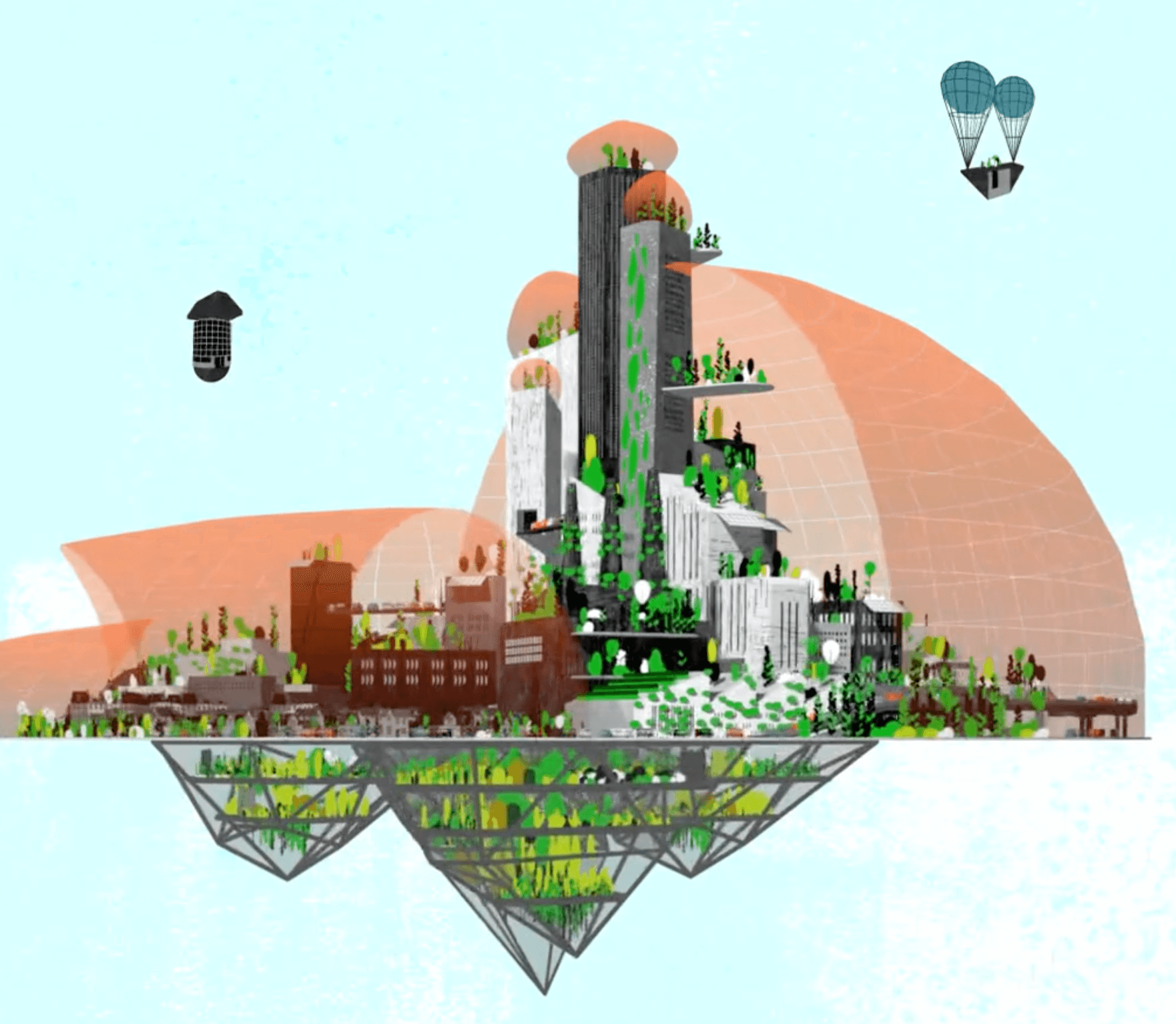
Designer Bruce Mau views the COVID-19 pandemic as a short-term crisis in a long-term trend toward positive development. He dares us to abandon our toxic lifestyle habits and urges us toward bolder urban design.

“The Big Reset – Cities” delightfully brings to life Bruce Mau’s radical vision of cities in the post-Covid world. The three-and-one-half minute film is one of four entries in “The Big Reset” category of The Curve, part of an online collection of stories about how the pandemic has touched the lives of Canadians, presented by the Film Board of Canada.


Principles To Change Everything, with Bruce Mau

This month Juliana Proserpio had the pleasure of interviewing Bruce Mau as a guest on Desired: The Podcast. Bruce Mau is a designer whose love of thorny problems led him to create a methodology for whole-system transformation. Across 30 years of design innovation, he’s collaborated with leading organisations, heads of state and renowned artists. Bruce has also impacted the world through the books he has written and co-authored on design and most recently, M24, a book about how to change ‘everything’.

The book lays out 24 principles for designing massive change in our lives and work. The following are some key insights in the principles we explored from his latest book, M24. The biggest learnings included how to shift from human centred design to what Bruce calls ‘life’ centred design. And how the only way to create massive change is to stay optimistic, there is no room for cynics if we want to change absolutely everything.

Designing A New Normal

Designing a new normal is on everyone’s today, however Bruce has been thinking about how to create new normals for 30 years. His principle about designing new normals focuses on creating environments that reward and inspire change.

This is contrary to how designers normally operate. Rather than making new normals feel simple and easy they do the opposite. While researching his book, Bruce discovered most designers alienate the people they would like to change.

Most designers are adventurous risk takers, Bruce explains, “When I hear the words, massive change, I get excited. Most people when they hear the words, massive change, they hold onto their wallet and back out of the room, they don’t want massive change. They want massive stay the same.”

To counteract this fear of change Bruce recommends a process that taps into the emotional aspects of decision making from Paul Dolan who developed a process called SNAP –  Salience, Norms, Affects and Primes. SNAP strives to make change feel normal, not different with these core ideas:

  • Salience – for capturing attention to get people to think about changing something
  • Norms – harness the power of the invisible structures that hold us in place and that people tend to follow without questioning
  • Affects – Discover the emotions that affect how most major decisions are made. For example, buying a house, if you really fall in love with one it is possible to spend more than originally planned
  • Primes –  are messages in the environment that help you do the right thing. For example a little sign on the freeway that says buckle up at the moment that you’re driving

Understanding how to combine all of the factors from SNAP into designing new systems are critical for the time we are living in when we are collectively working towards and designing the next normal. Not one that feels scary and new, rather, one that feels simple, intelligent and easy.

Designing A Platform For Constant Design

The idea that a design solution will remain effective forever is no longer plausible. Instead designers should solve problems in a way that it can be solved and resolved, that can get smarter, more beautiful and more intelligent over time. That way value can be sustained instead of trashing it every five years. It is more important to build on a process that other people can add to, evolve and change.

We are in a time of constant change. All solutions must be iterated because the world is going through dramatic change. Ray Kurzweil says that the 20th century and 21st century is like living through 60,000 years of human progress. We need to change our thinking as designers to accommodate this rate of exponential change.

Bruce sums it up in his book when he says, “The real design is the metadesign for a platform of continuous design development. This is design for constant design. This is design for Massive Change.”

Life Centred Design
We must move from being ‘human centred designers’ to ‘life centred designers’. This creates a fundamental change in how we work and what our objectives and goals are. Our responsibility as designers is not to sustain only human life and make it better. Rather we should focus on designing for the welfare of all of life in order to sustain human life.

We have an obligation and a responsibility to take design to a higher order of complexity. We should ask big questions such as, what are the long term implications of our decisions? What would happen if a billion people bought this product? This is the challenge when we focus on ‘all of life’ versus ‘human life’.

Design is Leadership

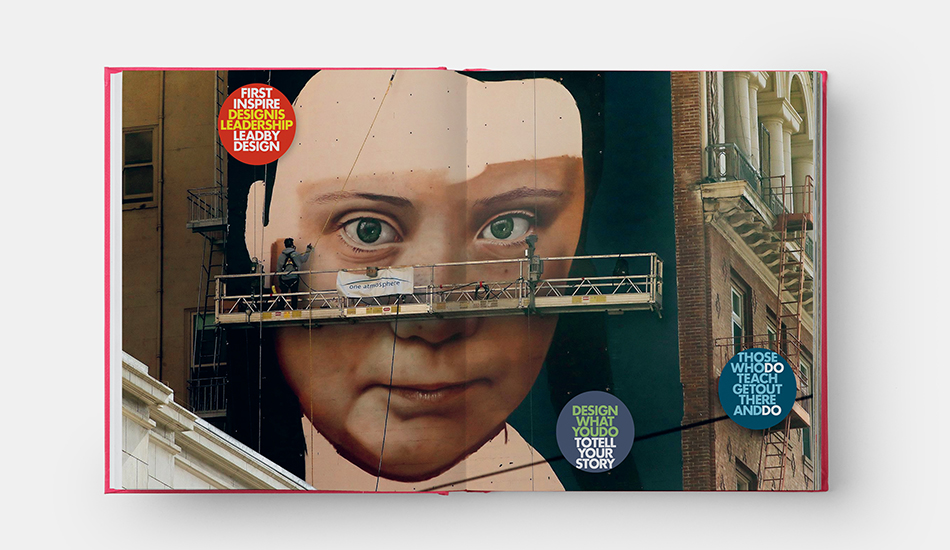
The role of what a designer is and does is changing. Every designer is producing a future through their work. Even the worst designer is creating a future, whether it’s inspiring or not. Once you acknowledge you are creating the future the question is, how do we make it more intelligent and how do we inspire people to go there?

This is where leadership comes in, we make it our responsibility to inspire. We can’t make people more intelligent,  sustainable or behave better. However, we can inspire them to behave better. This is a powerful principal responsibility as design leaders.

Bruce shares in his book, “As designers, we don’t have the authority to force change. Nonetheless, we have the power to inspire it.”

Listen For More

This interview is full of powerful insights, in particular around the mindset of optimism. Bruce warns, “I am allergic to cynicism and I kill it whenever I see it. I cannot tolerate it because we have no hope of solving the problems that we have if we start from a cynical place. We need to start from optimism.”

We encourage you to listen to the full episode here on Spotify. Be sure to subscribe to receive our new episode every month as we explore how design can and is building better futures for not only humans, but as Bruce says – for all of life.

If you are inspired to learn more about Bruce’s work and his book M24 you can order his book online. There are 24 incredible principles in this book and we would like to encourage you to discover them all.
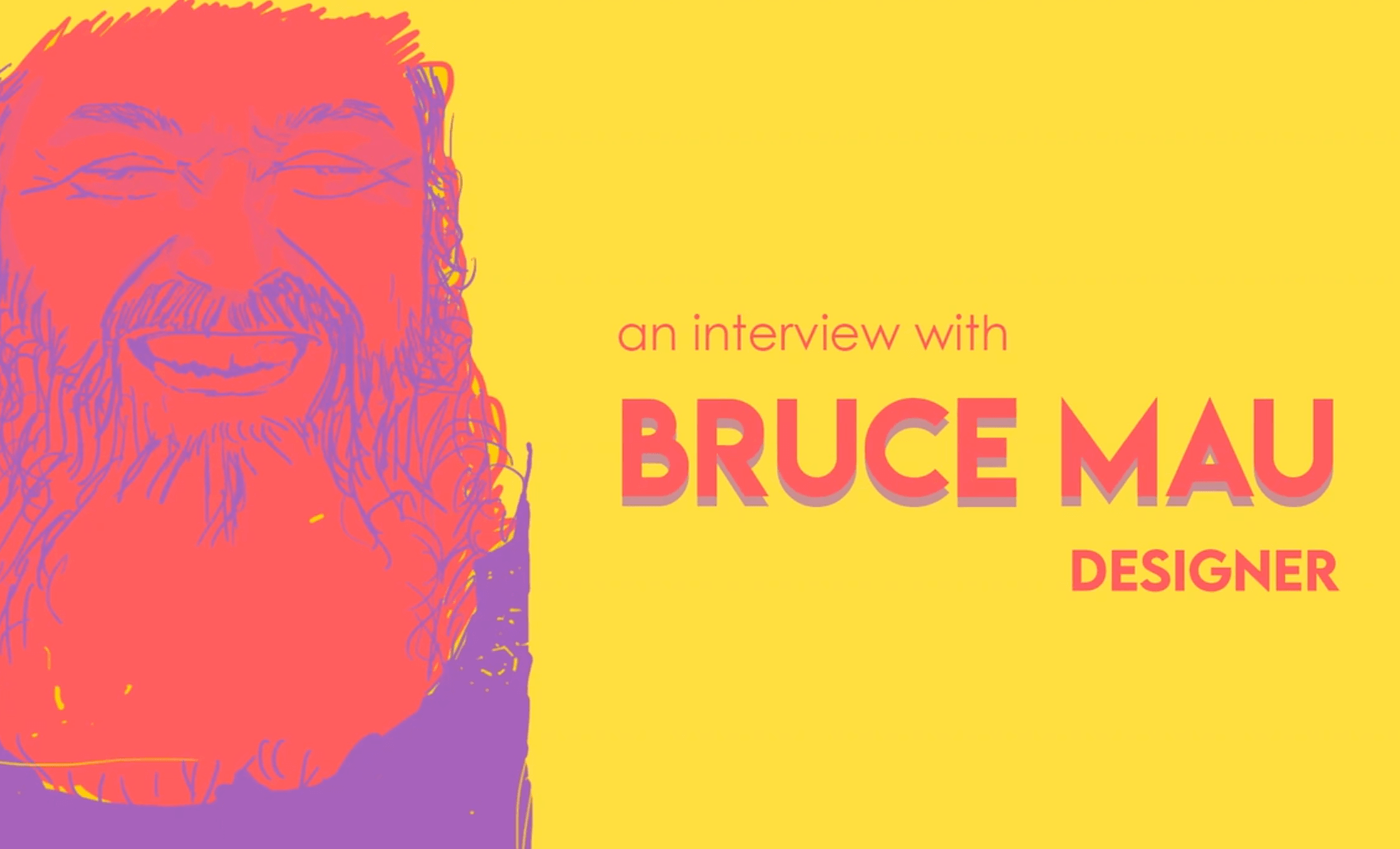

Bruce Mau: 24 principles for designing massive change

Listen to Bruce Mau: 24 principles for designing massive change

This month we are excited to announce our podcast with Bruce Mau, one of the most influential designers of our day. He has over 30 years of design innovation experience, has collaborated with leading organisations, heads of state and renowned artists. Bruce has recently published, M24, a book illustrating his 24 principles of design. Bruce goes into details on some of these principles in this episode and how they will help us design massive change in our lives and work.

LISTEN HERE

5 New books on design, decadence and disruption

Creatives, if you’re looking for some fresh sources of inspiration, this one’s for you. We’ve rounded up a shortlist of new and upcoming releases that we think would be exciting additions to your bookshelf. Some will give you literary and visual relief from the rollercoaster that 2020 has been. Most will light a fire under your seat, handing you the dose of optimism and urgency you’ll need to forge ahead. All will offer you tools to become better humans and designers — just what the doctor ordered. Keep reading for all the details, and feel free to add your own recommendations in the comments!

BRUCE MAU: MC24

by Bruce Mau

About the author: Canadian designer Bruce Mau is a world-leading visionary and co-founder of Massive Change Network, a cross-disciplinary project committed to exploring ways in which designers can ‘do good’.

About the book: Developed over the past three decades, this expansive, thought-provoking book explores 24 “global, generous, and galvanizing principles to overhaul the way we think and to inspire massive change.” It features essays, observations, and work by Mau and other game-changing architects, designers, artists, scientists, environmentalists, and thinkers of our time.

Why we picked it: Mau’s first book in over a decade, MC24 is a rousing call to action which promises to be both practical and playful. If you’re a designer looking for an antidote to boredom and cynicism, this is it.

Learn more: uk.phaidon.com/store/design/bruce-mau-mc24-9781838660505/

Here’s Bruce Mau to tell you about his new book!

MC24 is the book we need right now to change our lives, change how we work and change our futures. Watch the legendary designer explain

We admit the title of Bruce Mau’s new book, MC24, does sound a little bit like a secret formula. But if you dig into what that MC bit stands for you’ll find that it means Massive Change. And those two words really, are at the heart of Mau’s success.

As chief design officer of Freeman, one of the world’s largest brand-experience companies, and co-founder/CEO of Massive Change Network (MCN), a Chicago-based global design consultancy MauMau has brought just that to companies as diverse as: Netflix, Asics, Sonos, Audi and Samsung.

Now we can all apply his secret formulae every day, via his new book MC24 which delivers his hard-won knowledge in the form of a highly-readable manifesto packed with generous advice, tips and galvanizing principles to overhaul the way we think and inspire massive and sustainable change in our lives.

As Bruce says in the introduction: “Practically everything we do today needs to change. We are still doing most things as if we own nature and have unlimited resources. We work as if waste is not a problem; we treat our oceans like a pantry and a toilet; we think short term, party like there’s no tomorrow, and pass the check to the future; we dump problems that we can’t solve into places that we can’t see. And many of our solutions create more problems than they correct.”

You can read here, how he developed his MC24 principles when he couldn’t answer one very simple question. But for now, sit back and watch Bruce talk about the new book from his Toronto studio.

Then head into the store for the book or click here for some more Bruce Mau Know.

Bruce Mau Know How – Draw a Stick Man To Unlock a Big Idea

In Bruce Mau: MC24, the designer, thinker and educator argues that everyone can improve their thought processes through a simple sketch

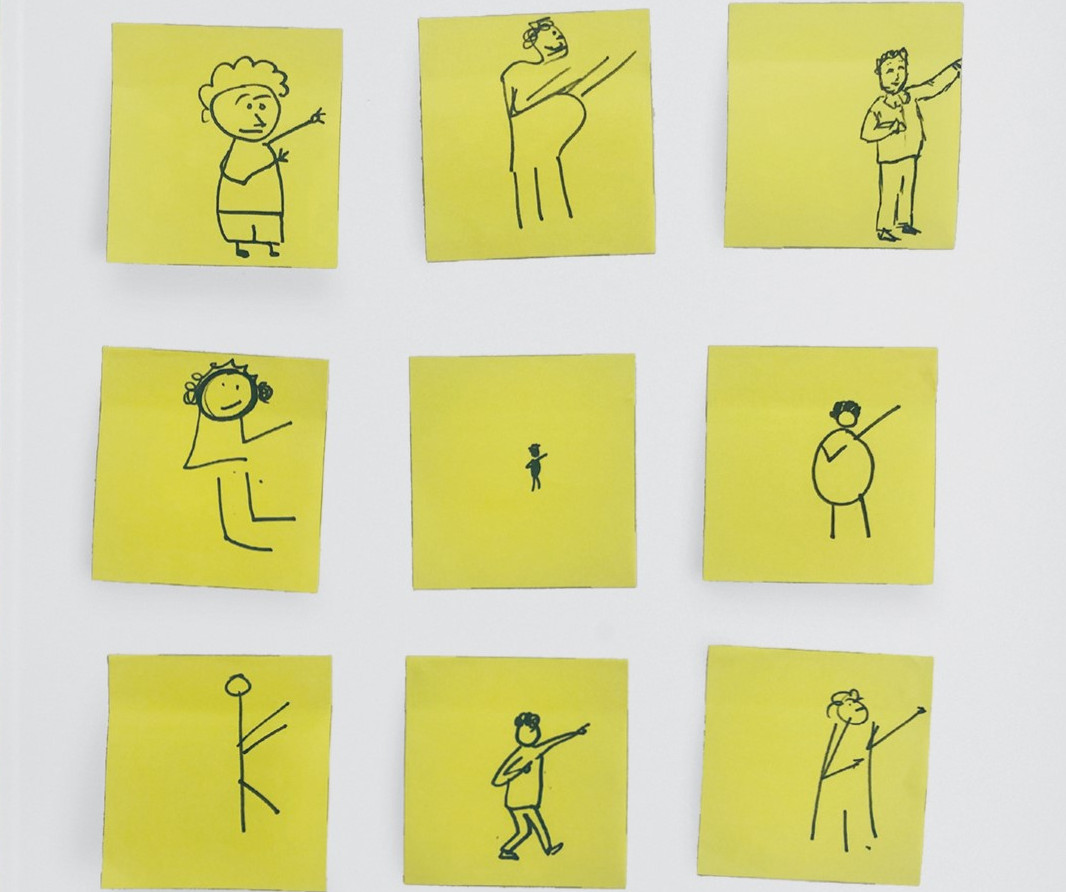
Stick men drawings. As reproduced in Bruce Mau: MC24

Why do so many of us sketch, doodle and draw as children, only to give up such activities in later life? Bruce Mau has an idea. “Sketching embraces failure,” he writes in his new book, Bruce Mau: MC24.

You might not think that Mau has a great deal of experience with failure. He is chief design officer of Freeman, one of the world’s largest brand-experience companies, and co-founder/CEO of Massive Change Network (MCN), a Chicago-based global design consultancy. He has applied the power of design to transforming the world, and the power of critical thinking to the design process.

His new book brings together 24 global, generous, and galvanizing principles to overhaul the way we think and to inspire massive change. One of these is entitled Sketch: Hey Everybody Let’s Fail!; and it’s here that he reveals that he too has “felt the sting of failure.”

“Our educational culture is obsessed with success, relentlessly punishing failure with embarrassment, extra work, and rejection. Our business schools groom for success. No wonder that almost everyone stops sketching at some point about the eighth grade,” he reasons. “We explore and learn by failing. We try things out and toss them away. In order to achieve the bright mountain top of success we need to make it through the dark valley of failure. Sketching is the pathway through the valley.”

To prove his point, Mau hosts sketching workshops, where participants work with paper and quite thick pens; thick because Mau believes “a thick pen will protect you from detail.”

He begins with a simple exercise: to sketch Mau himself. “A simple stick figure is good enough to capture the idea,” he writes. “Two outcomes are immediately evident: 1) anyone can do it, contrary to what they believe. 2) we can see many ideas simultaneously, a way of looking at something from different points of view. In a few seconds we demonstrate the power of collective creativity.”

Sketches of Mau’s exaggerated pose. As reproduced in Bruce Mau: MC24

Mau follows this up with a slightly more challenging assignment: he strikes a pose and asks this workshop to sketch this too. “Once again we see the diversity of thinking about how to capture that gesture,” he writes. “Almost everyone focuses on my open mouth. I explain that by using that expression I was pulling their attention to focus on that feature. By exaggerating, we can bring an idea into the foreground.”

Next, he pushes things further, by asking everyone to close their eyes and draw a camel. “The results are often hilarious,” he recalls. “Once again, we see the power of the group. We see dozens of camels in minutes (some obviously testing the boundaries of ‘camelness’). What you will notice is that we all sketch the camel in profile. We are drawing on a vast file of icons in our minds that can be powerful shorthand for sketching ideas. Most importantly, what we discover is that not only can we all sketch, we can do it with our eyes closed.”

Camel sketches. As reproduced in Bruce Mau: MC24

Finally, he asks his class to draw something quite abstract. “Sketch 75%,” he writes. “A number is not something you can look at, until you sketch it. The results of this exercise are very telling.

Visual thinkers will sketch a pie chart or some visual representation of 75%. Text-based thinkers will draw the numbers 75%. And abstract thinkers will draw a line that cuts the Post-it Note into the three-quarters and one quarter, or literally cut a quadrant out with scissors as in the example above.

Most importantly, we see that we can sketch ideas, abstractions, budgets, schedules—anything can be sketched and visualized and therefore shared easily. That is the power of sketching.”

Sketches of 75%. As reproduced in Bruce Mau: MC24

Do you think you could apply this powerful technique to your life and work? Then consider getting a copy of Bruce Mau: MC24. Practical, playful, and critical, it equips readers with a tool kit to engender change on all scales, from the personal to the global.


Bruce Mau Know How – How Getting Lost Can Help You Find Your Way

Mau’s childhood experiences of getting lost in the forest has helped him find new pathways for life

Bruce Mau is no stranger to the big cities of the world. He is chief design officer of Freeman, one of the world’s largest brand-experience companies, and co-founder/CEO of Massive Change Network (MCN), a Chicago-based global design consultancy. He has long applied the power of design to transforming the world. He’s been a visiting scholar at institutions globally, lectures widely, and has received honorary degrees from a huge array of institutions across the world. However, the circumstances of Mau’s early life contrasts starkly with his cosmopolitan career, and the wilderness of his childhood still informs the way he works today.

As the designer and educator explains in his new book Bruce Mau: MC24, – which contains his 24 principles for designing massive change in your life and work – the Mau family home was about as far off-grid as you can imagine.

“Where I grew up in the Canadian north, our home was the last farm on a road into the boreal wilderness,” he writes in a chapter headed Being Lost in the Forest Is a Feeling and a Mind-set. “Beyond, the forest stretched for hundreds of miles. If you lost your way out there, the chances of survival were minimal.”

Of course, Mau is alive and working today, and so of course he found methods to negotiate this environment. “I developed an intuitive way of reading the landscape that allowed me to hike for miles, and even days, and find my way home by tracking the sun and numbering geographical features as I went,” he explains.

Nevertheless, there were occasion on which the wilderness won. “Several times I experienced the gut-wrenching panic and confusion of losing my way,” he writes. “That feeling—the heart racing, the adrenaline rush, the sudden realization that if I couldn’t get oriented I would be in big trouble—is unforgettable.

“The environment I was perfectly in tune with until just a few moments ago had suddenly become a hostile actor, more than capable of taking my life. That overwhelming dread is something impossible to forget.

“Conversely, the experience of recovering, of regaining your orientation and finding your way back is profound,” he goes on to explain. “The hypervigilance I developed, doubling back and processing the environment to recover my certainty of direction and place, built up a confidence and skill set that allowed me to venture further and further.”

How can this backwoods knowledge help those of us working to solve highly complex problems, in today’s urban environment? Well, as Mau argues, getting lost helps you find a new, better path.

“The moment of facing and mastering an existential threat defines the mind-set of the entrepreneurial designer,” he writes. “As designers, we must go beyond the grid, we must venture beyond the mapmakers to where new possibilities are growing.

“The forest is wild with risks and rewards, opportunities and dangers, possibilities and pitfalls. There is a fundamental difference between following the path and cutting the path. If what you’re doing feels familiar, if there is already a path to walk, then someone else owns it. The entrepreneurial designer blazes a trail. Design is a method for dealing with the unknown. Design is a way to cut a trail through any forest… and find your way home.”

For more global, generous, and galvanizing principles to overhaul the way we think and to inspire massive change, whether we’re in splendid isolation or the concrete jungle, order a copy of Bruce Mau: MC24 here. Practical, playful, and critical, it equips readers with a tool kit and empowers them to make an impact and engender change on all scales.